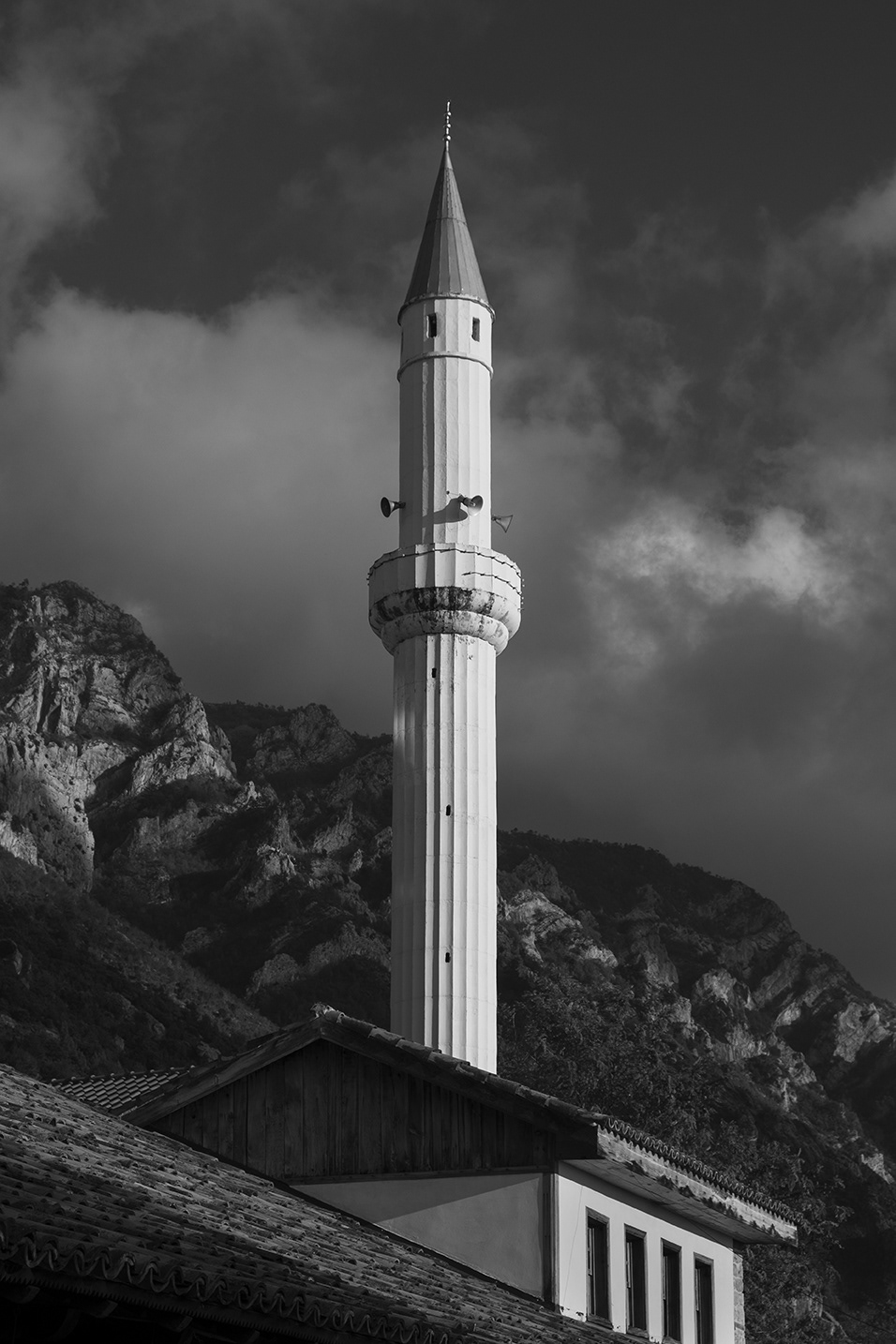
“And don’t look to churches or mosques: the Albanian’s faith is Albanianism!”
Pashko Vasa, "O Albania" (O moj Shqypni)
Albania has historically existed as a meeting point for different religious influences and identities.
Throughout its history, external political and religious pressures have often sought to divide its
population along confessional lines, while language, culture, and daily life have continued to
produce forms of coexistence among Muslim, Catholic, and Orthodox communities.
During Enver Hoxha’s communist regime, Albania became the world’s first officially atheist state,
imposing a ban on religious practices through violent anti-religious policies. However, the
repression of religion did not erase religious identities or shared forms of coexistence.
The project takes as its starting point from the symbolic role of the New Year’s Eve, one of the few
festivities permitted during the dictatorial period, and from how it has gradually become a collective
ritual shared across religious boundaries. Even today, Muslims, Catholics, and Orthodox Christians
continue to celebrate it in similar ways, just as sacred spaces, festivals, and daily rituals often
overlap and coexist within the country’s social fabric.
“...And Happy New Year” explores how forms of coexistence are constructed and maintained
through daily practices, shared spaces, and collective rituals. The work observes how different
communities inhabit the same collective space and how the traces of this coexistence
are embedded in daily life.
The project investigates how forms of collective existence continue to persist and adapt over time.
In a historical moment increasingly marked by divisions and individualism, the project aims to
reflect on how practices of shared forms of lives can still be maintained and negotiated in
contemporary society.
Pashko Vasa, "O Albania" (O moj Shqypni)
Albania has historically existed as a meeting point for different religious influences and identities.
Throughout its history, external political and religious pressures have often sought to divide its
population along confessional lines, while language, culture, and daily life have continued to
produce forms of coexistence among Muslim, Catholic, and Orthodox communities.
During Enver Hoxha’s communist regime, Albania became the world’s first officially atheist state,
imposing a ban on religious practices through violent anti-religious policies. However, the
repression of religion did not erase religious identities or shared forms of coexistence.
The project takes as its starting point from the symbolic role of the New Year’s Eve, one of the few
festivities permitted during the dictatorial period, and from how it has gradually become a collective
ritual shared across religious boundaries. Even today, Muslims, Catholics, and Orthodox Christians
continue to celebrate it in similar ways, just as sacred spaces, festivals, and daily rituals often
overlap and coexist within the country’s social fabric.
“...And Happy New Year” explores how forms of coexistence are constructed and maintained
through daily practices, shared spaces, and collective rituals. The work observes how different
communities inhabit the same collective space and how the traces of this coexistence
are embedded in daily life.
The project investigates how forms of collective existence continue to persist and adapt over time.
In a historical moment increasingly marked by divisions and individualism, the project aims to
reflect on how practices of shared forms of lives can still be maintained and negotiated in
contemporary society.